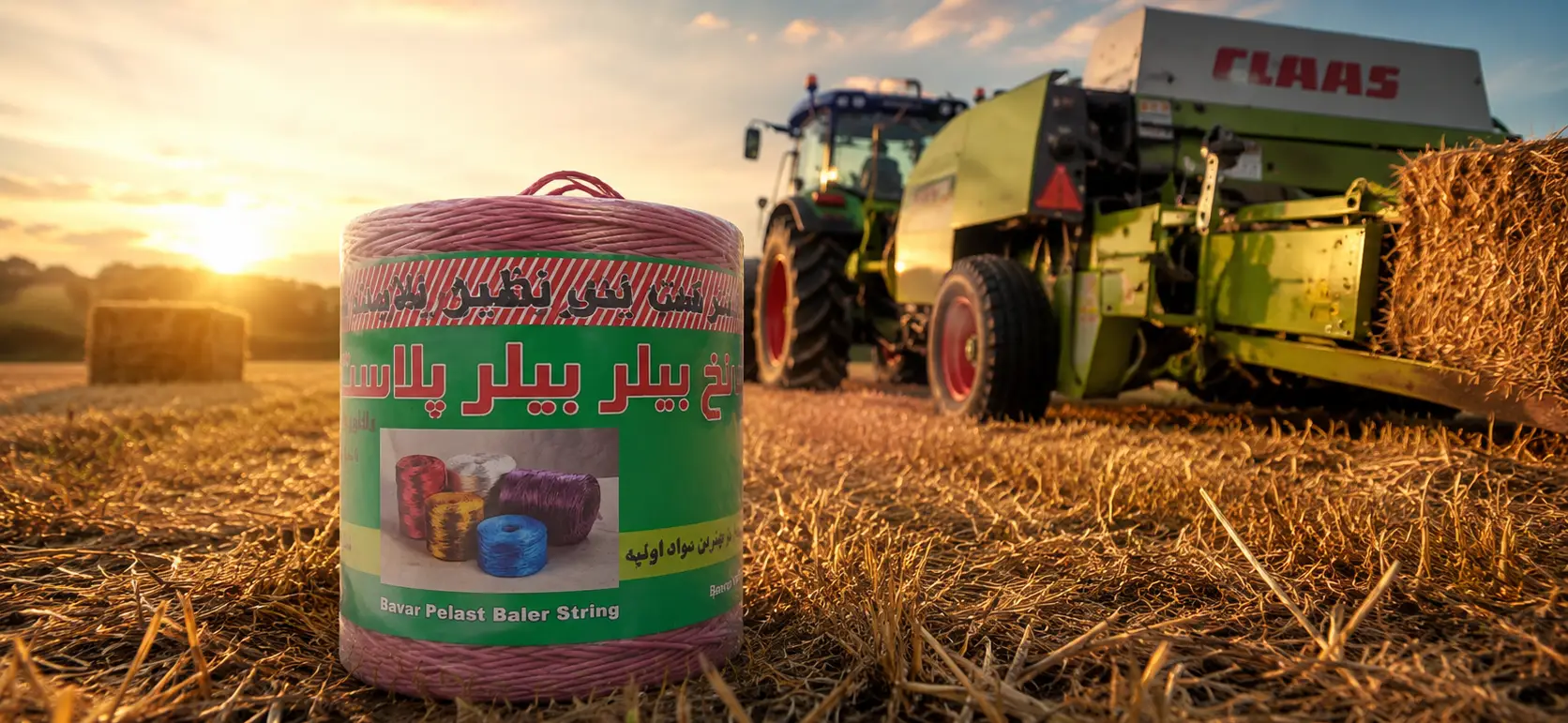
Square baler twine is one of the essential products in the agricultural and forage-packaging industry. It is used to tie and secure rectangular and square-shaped bales. This twine is used in square balers and is responsible for tightly binding compressed materials such as hay, straw, and dried forage.
During the harvesting and collection of agricultural crops, using the right twine is very important, because after leaving the baler, bales must retain their compressed shape during handling, loading, transportation, and storage.
Choosing unsuitable twine can cause the twine to break, knots to come undone, bales to fall apart, and the baler to malfunction. For this reason, farmers and wholesale buyers should consider factors such as tensile strength, knot strength, thickness, twine length, and compatibility with the machine when purchasing square baler twine.
To learn about the types of agricultural twine products and their specifications, you can visit the Mercovyn products page.
How Does Square Baler Twine Work?
Square balers are designed to compress agricultural products and turn them into neat, portable bales.
In these machines, forage or straw is first collected and fed into the compression chamber. The machine then applies pressure and forms the material into a rectangular bale. Once the bale reaches the desired size, the machine’s knotter system engages.
The twine passes through its designated path, wraps around the bale, and the knotter system secures the bale by tying strong knots. After the process is complete, the bale exits the machine and is ready for handling or storage.
The correct performance of this process depends on the quality of the twine and its compatibility with the machine components.
The most important factors affecting twine performance are:
-
Tensile strength: The twine must withstand the pulling force applied during baling and must not break while the machine is operating.
-
Knot strength: The knot must be strong enough not to come undone after the bale leaves the machine.
-
Thickness uniformity: The twine diameter must be consistent throughout its length so that it passes through the feeding and knotting systems without disruption.
-
Twist quality: Uniform and appropriate twist helps maintain the twine’s structure and ensures smooth operation.
-
Twine length per spool: A longer length of twine per spool can reduce the number of spool changes.
-
Raw material quality: The use of suitable, controlled raw materials affects the strength and durability of the product.
-
Machine compatibility: The twine must be compatible in thickness and technical specifications with the baler model and its knotter system.
What Is the Difference Between Square Baler Twine and Round Baler Twine?
One common question among buyers is whether the twine used for square bales differs from twine used for round bales.
Both types of twine are used for packaging agricultural products, but the type of machine, bale structure, and binding system can create different requirements.
Square Baler Twine
In square balers, the twine passes through the knotter system and secures the bale by forming knots.
In these machines, the twine’s resistance to tension and breakage, knotting quality, and thickness uniformity are very important. Square bales are usually produced as neat, regular packages and are suitable for row-based transportation and storage.
Round Baler Twine
In round balers, forage is compressed into a cylindrical shape. In many of these machines, the twine moves around the bale and wraps it in several turns.
In this system, twine length, feeding method, tensile resistance, and compatibility with the machine mechanism are important.
Can the Same Twine Be Used for Both Machines?
Using one type of twine in different machines depends on the product’s technical specifications and the machine manufacturer’s requirements. Simply having similar twine material does not mean it is compatible with all balers.
For this reason, the twine’s technical specifications and the machine manufacturer’s recommendations should be reviewed before purchase.
What Is the Best Material for Square Baler Twine?
One of the most common raw materials for producing forage-binding twine is polypropylene.
Polypropylene twine, known as PP baler twine, is widely used in the agricultural industry due to its low weight, suitable strength, low water absorption, and ability to be produced in different specifications.
The most important features of polypropylene twine are:
-
Low weight: The low weight of the twine helps reduce the overall weight of the packaging.
-
Suitable tensile strength: When properly designed and produced, polypropylene twine can withstand the forces applied during baling.
-
Low moisture absorption: This feature means the twine absorbs little water in humid environments.
-
Chemical resistance: Polypropylene has suitable resistance to many common chemicals.
-
Availability in different colors: This material allows twine to be produced in a variety of colors and custom colors.
-
Availability in different specifications: Twine can be produced with different thicknesses, lengths, and spool weights.
However, the final quality of the twine does not depend on the polymer material alone. Raw material quality, the extrusion process, strand structure, twist level, and product quality control also affect performance.
Key Features of Suitable Twine for Square Balers
When purchasing square baler twine, several technical specifications should be checked.
1. Tensile Strength
Tensile strength indicates how much pulling force the twine can withstand before breaking.
In square balers, the twine must withstand the forces applied during compression and baling. If the twine’s tensile strength is too low, the likelihood of breakage during operation increases.
In addition to wasting twine, this can cause machine downtime and lost operator time.
2. Knot Strength
Knot strength is one of the most important specifications of square baler twine.
In square balers, the knotter system is responsible for connecting and tightening the twine. If the twine weakens at the knot or breaks during knotting, the bale cannot be properly secured.
For this reason, suitable twine must have not only good tensile strength but also appropriate strength at the knot.
3. Twine Thickness and Uniformity
The twine thickness must be uniform throughout its length. Large variations in twine diameter can cause problems in the machine’s feeding or knotting system.
Irregular twine may not pass correctly through the machine’s designated paths or may not perform consistently during baling.
4. Twine Length per Kilogram
Twine length per kilogram is an important specification for calculating consumption and packaging costs.
Two spools with the same weight may have different lengths. This difference can be related to thickness, structure, and production specifications.
Therefore, when comparing different products, do not consider only spool weight; also check twine length.
5. Spool Weight
Spool weight affects the amount of usable twine and the number of times the spool must be replaced.
Heavier spools usually provide a longer length of twine, although the exact amount depends on the product’s technical specifications.
For example, Mercovyn products are supplied at approximately 6 kg per spool. For exact product specifications, you can visit the Mercovyn products page.
6. UV Resistance
Many forage bales are stored outdoors for some time after baling. Direct sunlight and ultraviolet radiation can gradually reduce the mechanical properties of polymers.
The use of UV stabilizers in twine production can increase its resistance to sunlight and help maintain product quality under suitable storage conditions.
Why Does Twine Quality Matter in Square Bale Packaging?
Twine quality has a direct effect on the cost and efficiency of agricultural operations.
Imagine a baler producing many bales during the day. If the twine used is not of suitable quality, repeated breakages can cause machine downtime and increase the time required for baling.
The most important problems caused by using unsuitable twine include:
-
Twine breakage during forage compression
-
Knots coming undone after the bale leaves the machine
-
Loss of the bale’s compressed shape
-
Disruption of the knotter system
-
Increased machine downtime
-
Increased twine consumption and operating costs
-
Greater difficulty in transporting and storing bales
By contrast, using suitable twine that is compatible with the machine can help reduce operational problems and improve the orderliness of the baling process.
What Colors Is Square Baler Twine Available In?
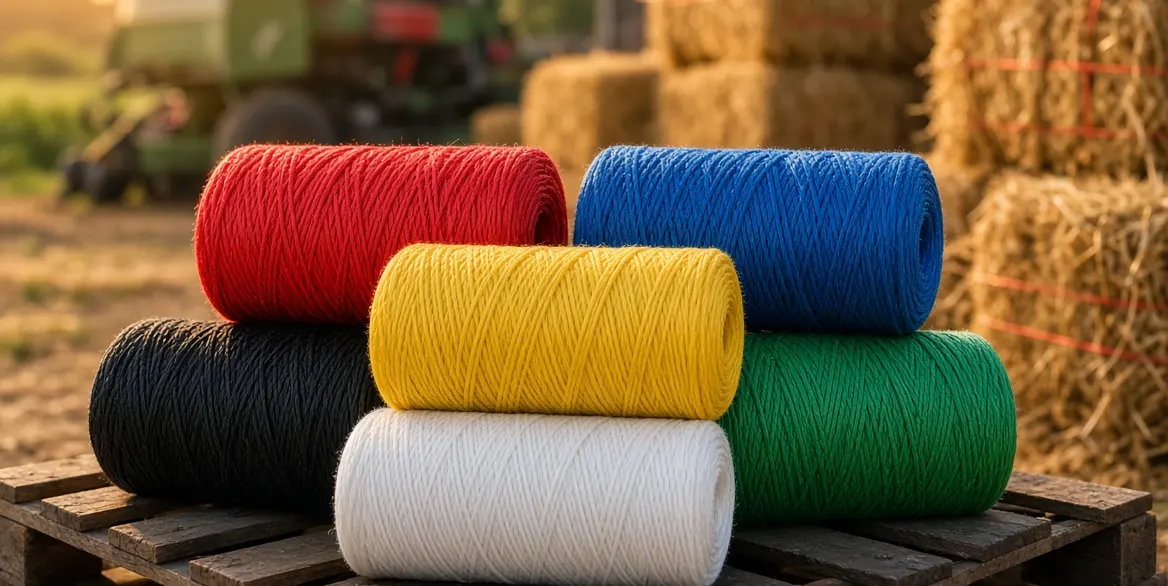
Agricultural polypropylene twines are produced in various colors. Color selection can be based on market demand, customer orders, product identification systems, and buyer preferences.
Common baler twine colors include:
-
Pink baler twine
-
Green baler twine
-
Yellow baler twine
-
White baler twine
Twine color alone does not indicate its strength or quality. Two twines of different colors can have the same technical specifications.
Mercovyn can produce twine in various and custom colors to meet customer needs. Wholesale buyers can specify their desired color when placing an order.
To learn about products and color options, you can visit the Mercovyn website.
What Should You Consider When Buying Square Baler Twine?
If you plan to buy twine for square balers, it is best to check the following before placing an order:
-
Baler model: Specify which model and knotter system the twine is intended for.
-
Type of agricultural product: The type of forage, compression level, and bale weight can affect twine selection.
-
Tensile strength: The twine’s strength should match the working conditions and the pressure applied to the bale.
-
Knot strength: The twine must also have sufficient strength at the knot.
-
Thickness and uniformity: The twine diameter should be consistent throughout the spool.
-
Twine length per spool: Twine length affects consumption and final cost.
-
Spool weight: Product weight should be compatible with the user’s needs and the machine’s feeding system.
-
Raw material quality: The use of suitable raw materials is important for twine durability and performance.
-
Resistance to environmental conditions: If bales are stored outdoors, UV resistance becomes more important.
-
Consistent supply: For farmers and wholesale distributors, regular and consistent product supply is very important.
Why Is Buying Twine from a Reliable Manufacturer Important?
When buying forage-binding twine wholesale, price should not be the only decision-making criterion. Quality and consistency of technical specifications across different shipments are also very important.
A reliable manufacturer should be able to supply products with consistent quality, clear technical specifications, and suitable packaging.
In addition, custom color production, fulfillment of wholesale orders, provision of technical information, and shipping planning are factors that matter to international buyers.
Mercovyn is active in the production and supply of polypropylene twine for forage baling. The company’s products are offered with a focus on strength, twist quality, smooth twine unwinding, and suitable packaging for agricultural markets.
Buying Square Baler Twine from Mercovyn
Choosing the right twine for square balers can affect baling quality, reduce machine downtime, and make bale transportation easier.
Mercovyn supplies agricultural polypropylene twines in various colors, including black and pink, and custom color production is also available.
According to the specifications stated for Mercovyn products, the twines are made of polypropylene, each spool weighs approximately 6 kg, and the stated product strength reaches up to 70 kg. The approximate coverage is 700 to 800 bales per pair of spools; this amount depends on bale size and density.
To view products, review specifications, and receive more information, you can visit the Mercovyn products page or contact the company through the official Mercovyn website.
Frequently Asked Questions About Square Baler Twine
What is square baler twine called?
This product is known as square baler twine, square bale twine, and baler twine, and is used to tie rectangular and square-shaped bales in agricultural balers.
Is polypropylene twine suitable for square balers?
Yes, polypropylene twine is one of the common options for square balers. However, the right product should be selected based on thickness, strength, knot strength, and the specifications recommended for the machine.
How strong should square baler twine be?
The required strength depends on the type of machine, bale weight and density, type of agricultural product, and operating conditions. Therefore, a single fixed number cannot be considered suitable for all machines and applications.
Is square baler twine different from round baler twine?
These two types of twine are used in different baling systems. Twine compatibility with the machine depends on the product’s technical specifications and the machine’s feeding and knotting mechanism.
What is the weight of each Mercovyn twine spool?
Each Mercovyn twine spool weighs approximately 6 kg. For exact specifications and order details, you can check the products page.
Is it possible to order twine in a custom color?
Yes, twine can be produced in custom colors based on customer request. Wholesale buyers can specify their desired color when placing an order.
What causes twine to break in a square baler?
Low tensile strength, insufficient knot strength, unsuitable thickness, poor raw material quality, incorrect machine adjustment, and incompatibility between the twine and the knotter system are possible causes of twine breakage.
Conclusion
Square baler twine is one of the important components in the agricultural packaging process. It must be able to hold compressed bales of hay, straw, and forage well and resist the forces applied during baling and handling.
Tensile strength, knot strength, thickness uniformity, twine length, spool weight, and UV resistance are among the most important specifications to check when purchasing.
Polypropylene twine is one of the most widely used options for agricultural bale packaging due to its low weight, low moisture absorption, and ability to be produced in different colors and specifications.
To choose the right product, it is best to match the technical specifications of your baler and your operational needs with the features of the twine. Mercovyn, by supplying polypropylene twines in various colors and offering custom color production, is ready to meet the needs of buyers and distributors of agricultural products.