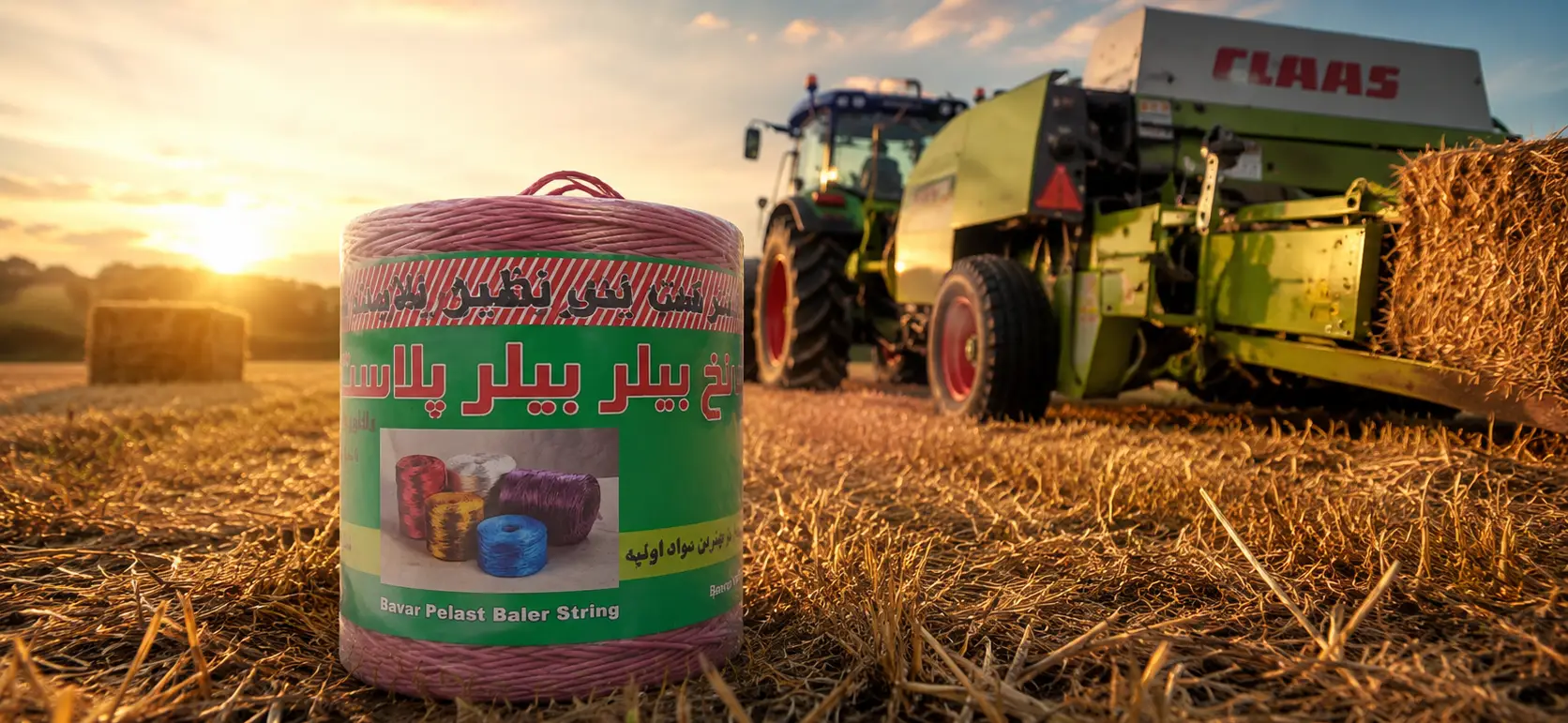
Baler twine is an essential product in the agricultural and livestock industries. It is used to compress and tie agricultural materials such as hay, straw, and other types of forage into compact bales. This twine is used in baling machines to securely bind compressed agricultural materials , making them easier to handle , store,and transport.
Choosing the right baler twine is important because its quality can directly affect bale strength, baler performance, product loss, and overall agricultural operating costs. For this reason, understanding the different types of baler twine, their raw materials, technical specifications, and applications is essential for farmers , livestock producers, and wholesale buyers.
How Does Baler Twine Work?
Baler twine is used in machines specifically designed to compress and package agricultural materials. When hay, straw, or other forage enters a baler, the machine applies pressure to form it into a compact bale.
Once the bale reaches the required size, the machine's knotter system wraps the twine around it and ties a secure knot. The finished bale is then released from the machine while maintaining its compact shape.
The effectiveness of this process depends on several factors:
-
Tensile Strength: If the twine has insufficient tensile strength, it may break under the tension applied by the baler, interrupting the entire process. In such cases, the operator must replace the twine and restart the process.
-
Knot Strength: Some types of twine become brittle when tied into knots and may break during the knotting process. This is an important performance factor that Mercovyn twine is designed to address.
-
Consistent Thickness and Diameter: The twine should maintain a uniform diameter throughout its entire length and be evenly wound onto the spool.
-
Twine Length per Spool: Since baler twine is supplied in long lengths, it is generally sold by weight rather than by length. Our spools typically weigh between 6 and 6.5 kg.
-
Raw Material Quality: The raw materials should be virgin rather than recycled, as recycled materials may reduce the twine's strength and overall performance.
-
Compatibility with the Baler's Knotter System: The twine must be suitable for the machine's feeding and knotting mechanisms.
If the twine is not of sufficient quality, it may break during baling, the knots may come undone, or the machine's performance may be disrupted.
What Is Baler Twine Made Of?
One of the most commonly used raw materials for manufacturing baler twine is polypropylene. Polypropylene is a thermoplastic polymer widely used in agricultural twine production because of its low weight, suitable strength, ease of processing, and cost-effectiveness.
Twine made from polypropylene is commonly known as PP Baler Twine.
The main advantages of polypropylene in baler twine production include:
-
Lightweight: It allows manufacturers to produce lightweight twine with suitable strength.
-
Tensile Strength: When properly designed and manufactured, polypropylene twine can withstand the forces applied during the baling process.
-
Moisture Resistance: Polypropylene absorbs very little water, making it suitable for agricultural environments.
-
Chemical Resistance: It offers good resistance to many commonly encountered chemicals.
-
Available in Different Colors: It can be manufactured in a wide range of standard and custom colors.
-
Versatile Manufacturing: It can be produced in different technical specifications, thicknesses, and spool weights.
However, the final quality of baler twine does not depend on the raw material alone. Manufacturing processes, additive quality, fiber structure, and quality control also play important roles in determining product performance.
Types of Baler Twine
Baler twine can be classified according to its material, structure, thickness, strength, and intended application.
1. Polypropylene Baler Twine (PP Baler Twine)
Polypropylene baler twine is one of the most common options for agricultural baling. Its lightweight structure, moisture resistance, and availability in different specifications make it suitable for use in many hay balers.
PP twine can be used for baling hay, straw, and other agricultural materials. The right product should be selected according to the type of baler, bale weight, and operating conditions.
2. Sisal Twine
Sisal twine is manufactured from the natural fibers of the agave plant. Due to its natural fiber structure, it is used in certain agricultural applications.
The main characteristics of sisal twine include:
-
Made from natural fibers
-
Biodegradable
-
Natural fibrous texture and relatively rough surface
-
Generally more sensitive to moisture and storage conditions than polypropylene twine
Both sisal and polypropylene twine have their own characteristics. The right choice depends on the user's requirements and the specifications of the baling machine.
What Is Baler Twine Used For?
The primary purpose of baler twine is to bind and secure compressed agricultural materials. Depending on the type of twine and its technical specifications, it can be used in several applications.
Hay Baling
Hay is one of the most important agricultural products used in the livestock industry. After harvesting and drying, hay is compressed into compact bales using baling machines.
Baler twine holds these bales together, allowing them to be transported and stored more easily while maintaining their shape.
Straw Baling
After grain harvesting, straw is collected and compressed for various purposes, including livestock bedding and other agricultural applications.
Using suitable baler twine helps straw bales maintain their shape during transportation and storage.
Baling Other Agricultural Materials
Depending on the machine and the producer's requirements, agricultural baling twine can also be used for other materials, including:
-
Dry forage
-
Compressed plant materials
-
Certain agricultural crop residues
-
Materials suitable for processing with agricultural balers
Important Technical Specifications of Baler Twine
When purchasing baler twine, price and appearance should not be the only considerations. The technical specifications determine whether a particular product is suitable for the intended machine and operating conditions.
1. Tensile Strength
Tensile strength refers to the maximum pulling force a twine can withstand before breaking. It is one of the most important criteria when selecting baler twine.
Twine with insufficient tensile strength may break during forage compression or when bales are being handled and transported.
2. Knot Strength
Knot strength refers to the amount of force a tied knot can withstand before the twine breaks or the knot fails.
Since baling machines use knotting mechanisms to secure bales, this property has a direct impact on the twine's performance during operation.
3. Length per Kilogram
One of the important specifications of agricultural twine is the total length of twine contained in each kilogram.
For example, two products may have the same weight but provide different lengths because of differences in thickness and fiber structure.
This specification is important for calculating twine consumption and the overall cost of baling.
4. Spool Weight
Spool weight is another important factor when purchasing baler twine in bulk. Agricultural twine is manufactured and supplied in different spool weights.
The spool weight should meet the buyer's requirements and be compatible with the baler's twine-feeding system.
5. UV Resistance
Baler twine may remain outdoors for extended periods. Prolonged exposure to sunlight and ultraviolet (UV) radiation can gradually reduce the mechanical properties of certain polymers.
For this reason, using UV stabilizers in twine manufactured for outdoor applications can help improve its durability.
What Is the Difference Between Red, Black, and Other Baler Twine Colors?
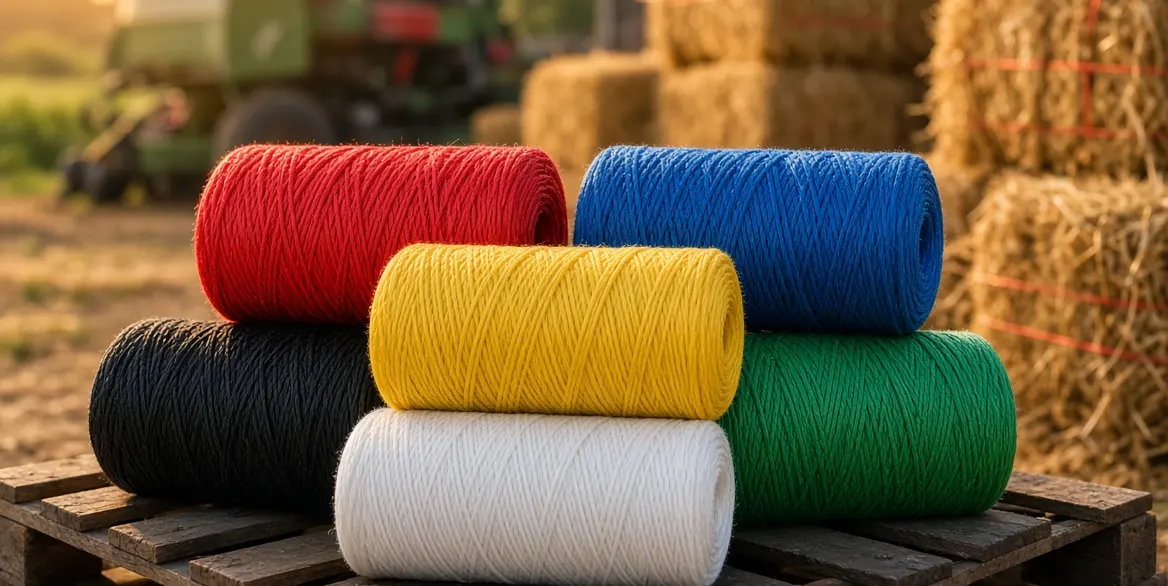
Baler twine is manufactured in different colors. Color can be important for product identification, order separation, inventory management, and meeting specific market requirements.
Common baler twine colors include:
-
Pink Baler Twine
-
Black Baler Twine
-
Red Baler Twine
-
Blue Baler Twine
-
Green Baler Twine
-
Yellow Baler Twine
-
White Baler Twine
It is important to understand that color alone does not indicate the quality or strength of baler twine. The product's actual performance depends on its raw materials, formulation, manufacturing structure, and technical specifications.
Custom colors can also be produced according to customer requirements. Wholesale buyers can specify their preferred color when placing an order, allowing the product to be manufactured to match their market needs or brand identity.
What Should You Consider When Buying Baler Twine?
Before purchasing baler twine, it is important to evaluate several key specifications:
-
Type of Baler: The twine must be compatible with the machine model and its knotter system.
-
Agricultural Material: Baling hay, straw, and other materials may require different twine specifications.
-
Tensile Strength: The twine's strength should be suitable for the weight and compression pressure of the bales.
-
Knot Strength: Reliable knot performance is essential to prevent bales from coming undone.
-
Twine Length: The actual length of twine on each spool affects consumption and overall operating costs.
-
Raw Material Quality: High-quality raw materials contribute to the durability and performance of the finished product.
-
Storage Conditions: Twine should be stored properly and protected from prolonged exposure to direct sunlight.
-
Consistent Supply: For wholesale buyers and large-scale agricultural operations, the ability to secure regular and reliable supplies is particularly important.
Why Is Choosing the Right Baler Twine Manufacturer Important?
Purchasing baler twine from a reliable manufacturer can help ensure a consistent supply and better quality control.
For bulk orders, buyers should consider more than just the price. Consistency in technical specifications across different production batches, uniform product quality, proper packaging, and the ability to manufacture according to customer requirements are all important factors.
For international buyers, additional considerations include export arrangements, production capacity, delivery schedules, packaging methods, and the ability to handle orders in different quantities.
Conclusion
Baler twine is an essential product in modern agriculture, used to compress, bind, and secure materials such as hay and straw.
Polypropylene baler twine is widely used in the agricultural industry because of its lightweight structure, moisture resistance, and availability in different colors and technical specifications.
When selecting the right product, buyers should consider factors such as tensile strength, knot strength, twine length, spool weight, UV resistance, and compatibility with their baling machines.
Mercovyn focuses on manufacturing agricultural baler twine and aims to meet the needs of wholesale buyers with products tailored to their technical specifications and preferred colors. For custom orders, color selection, and detailed product specifications, please contact the Mercovyn sales team.